Rain
A connection between what happens above your head and beneath your feet.
Rain is liquid precipitation. After reaching the ground, water can run into rivers, enter the soil or return to the atmosphere.
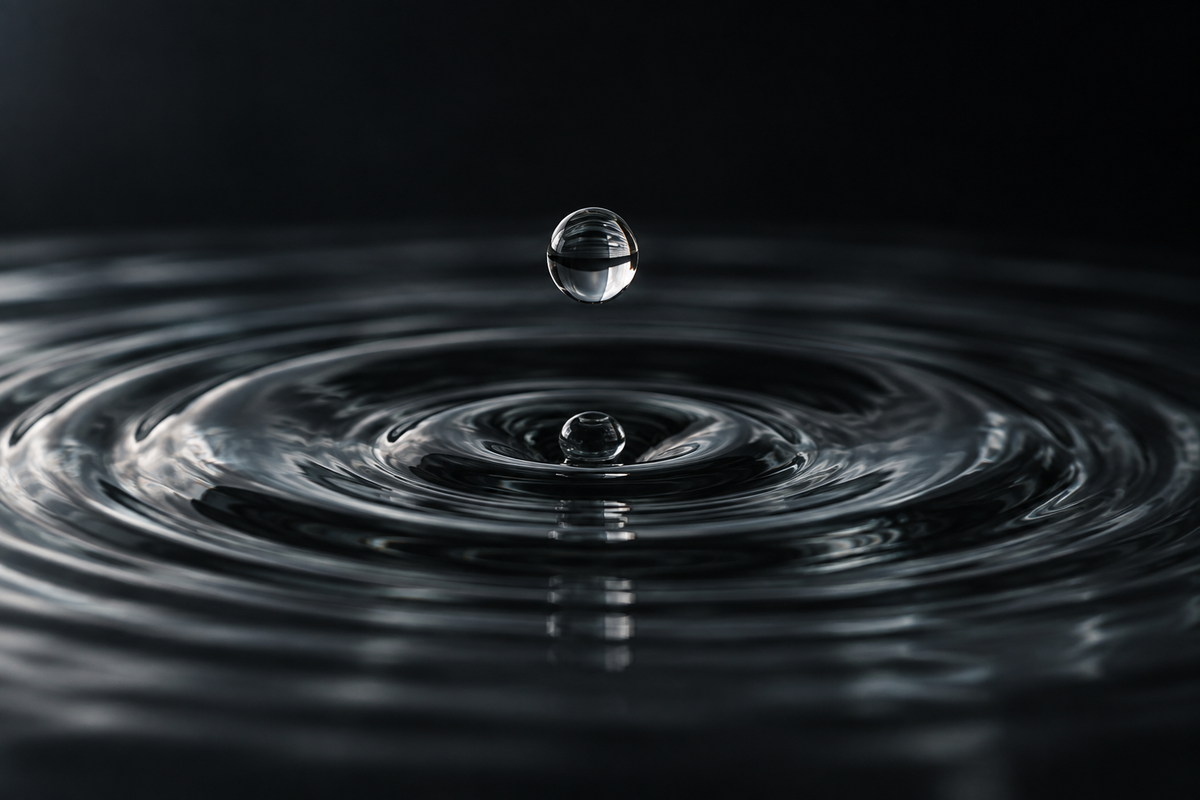
The sky borrows its water.
One simplified loop within a branching water cycle. Water can remain in storage or take other routes.
-
Evaporation & transpiration
Water enters the atmosphere from surfaces and plants.
Explore Water → -
Vapour moves & cools
Air transports water vapour; cooling can bring it to saturation.
-
Clouds form
Droplets or ice particles form around small airborne particles.
-
Particles grow
Collisions and ice-related processes help particles grow.
-
Precipitation falls
Liquid rain reaches the ground; other conditions produce snow or other forms.
-
Water branches
Runoff, infiltration and storage reconnect water to land and oceans.
Explore Water supply →
↻ Water can return to the atmosphere
Sources for this exploration
A cloud is not water vapour.
Water vapour is invisible. A visible cloud contains tiny liquid droplets, ice crystals, or both. These views show levels of organisation, not a measured zoom.
-
Weather system
Moving air carries moisture across a wider region.
-
Cloud
A visible collection of suspended droplets or ice particles.
-
Droplet / crystal
Small particles can grow through different physical processes.
-
Water
The same substance moves between vapour, liquid and ice.
Explore Water →
Sources for this exploration
Where could this take you next?
Where does the cycle go beyond the cloud?
Rain is part of the movement and storage of water.
Energy ↗What helps lift water back into the sky?
Solar energy helps drive evaporation.
Water supply ↗Can falling rain become water from a tap?
Water sources connect to treatment and distribution.
Coffee farm ↗What does a cloud have to do with your coffee?
Rainfall is part of the water supply for agriculture.
Sources & further reading +
Short explanations, grounded in published sources. Follow the originals for depth and context.
Sources checked: 10 September 2026. Visuals are illustrations, not documentary evidence.
Our approach to sources and corrections